
From Advocacy to Action
In this article, Marjus Ceveli, co-president and co-founder of Sustainable Cooperation for Peace & Security (SCPS) reflects on the development of Italy’s first National Action Plan on Youth, Peace and Security, offering insights drawn from its direct engagement in the process. Through this contribution, SCPS highlights the transition from sustained civil society advocacy to concrete institutional action, shedding light on the collaborative efforts that made this milestone possible.
From Advocacy to Action: Reflections on the Development of Italy’s First National Action Plan on Youth, Peace and Security
The adoption of Italy’s first National Action Plan (NAP) on Youth, Peace and Security (YPS) marks a historic milestone in the country’s evolving approach to participatory peacebuilding and inclusive security governance. Signed in 2026 by the Ministry of Foreign Affairs and International Cooperation alongside the Ministry for Sports and Youth, the Plan reflects not only the adoption of a policy framework, but the institutionalisation of a broader national effort to embed youth participation within Italy’s peace and security architecture.
More broadly, the Italian process offers valuable lessons for the international peacebuilding community on how sustained advocacy, institutional cooperation, and meaningful civil society engagement can translate global normative commitments into concrete national action.
A Process Rooted in Civil Society Mobilisation
Peace and security are not concessions or favours granted by the State; they are fundamental rights. For youth, these rights translate into clearly identifiable public policy dimensions.
Italy’s YPS journey did not emerge in isolation, nor was it solely the result of institutional initiative. It was built upon years of sustained advocacy and coalition-building led by youth-led organisations, civil society actors, and peacebuilding practitioners committed to localising the Youth, Peace and Security Agenda in the Italian context.
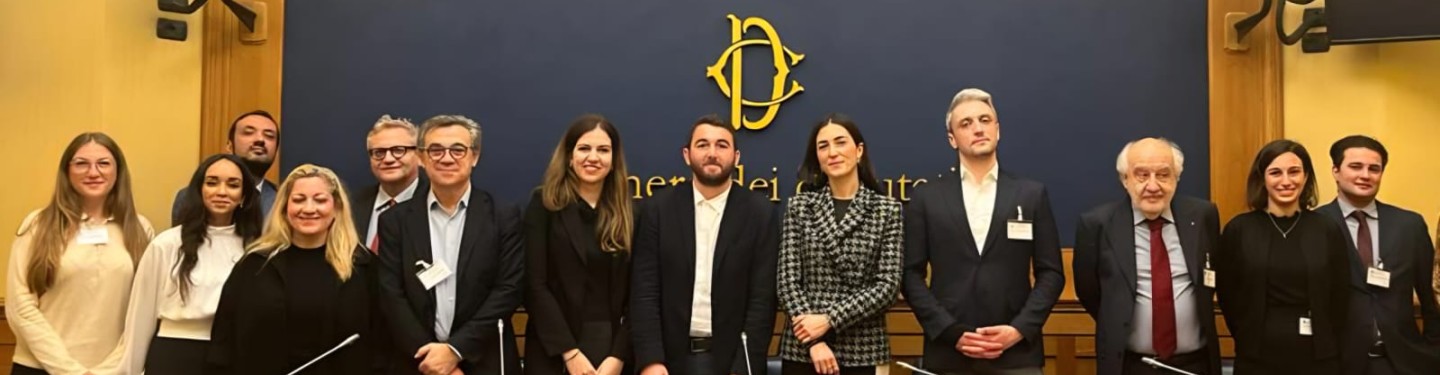
A defining moment in this process came in December 2023, when civil society organisations working on UNSCR 2250 implementation convened a press conference at the Italian Chamber of Deputies, formally launching a public advocacy process and bringing the YPS agenda into Italy’s parliamentary and institutional discourse.1
This momentum was further consolidated on 5 April 2024 with the signing of the Italian Youth, Peace and Security Manifesto2, endorsed by a coalition of Italian and international organisations. Inspired by UNSCR 2250, the Manifesto called for the establishment of a National Action Plan, the creation of a joint secretariat between institutions and civil society, and the allocation of adequate financial resources to ensure meaningful implementation. 3 4
These milestones were far from symbolic. They reflected the consolidation of a national coalition capable of generating the political momentum required to move from advocacy to institutional action.
Institutionalising Youth, Peace and Security in Italy
Following this advocacy phase, the YPS process evolved into a structured institutional framework coordinated by the Ministry of Foreign Affairs and International Cooperation (MAECI), under the leadership of Ambassador Luca Fratini, Coordinator for Women, Peace and Security (WPS), Youth, Peace and Security (YPS), Mediation, and Deputy Director for UN and Human Rights affairs together with Prof. Cristiana Carletti – expert at the Interministerial Committee for Human Rights at the Italian MFA. This positioning reinforces YPS not as a standalone youth policy area, but as an integral component of Italy’s broader foreign policy, peacebuilding, and international cooperation agenda.
The process has been supported by a core institutional group composed of the Department of Youth Policies and Civil Service of the Prime Minister’s Office, the Ministry for Sports and Youth, the Italian Agency for Youth, and the National Youth Council.
This governance architecture reflects the cross-cutting nature of the YPS agenda. Youth, Peace and Security cannot be confined to a single policy field; it intersects with foreign affairs, youth participation, education, prevention strategies, social inclusion, and development cooperation. The Italian model therefore highlights the importance of inter-institutional coordination mechanisms capable of bridging multiple sectors of governance.
Political commitment alone is insufficient without the institutional coordination mechanisms necessary to ensure coherence, communication, and operational alignment across all relevant stakeholders.
A Genuine Co-Creation Process
One of the most promising dimensions of the Italian experience has been the consistent involvement of civil society throughout the drafting and consultation phases of the National Action Plan.
Civil society organisations were not engaged solely as external stakeholders, but actively participated across the entire process, contributing to discussions, shaping priorities, and providing substantive policy recommendations. Many of the thematic priorities reflected in the final Plan stem directly from civil society inputs gathered during consultations.
The technical drafting of the Plan was entrusted to the Interministerial Committee for Human Rights (CIDU) within the Ministry of Foreign Affairs, ensuring both technical rigor and alignment with broader human rights and multilateral frameworks.
This approach demonstrates that meaningful participation in YPS policymaking is possible when civil society is recognised not as an external actor, but as a substantive partner in policy design.
The Real Work Begins Now
While the adoption of the National Action Plan represents a key achievement, it must be understood as a beginning rather than a conclusion.
"The real test of Italy’s commitment to the Youth, Peace and Security agenda lies in implementation" - Luca Fratini.
Political endorsement alone is insufficient. Sustained impact will require long-term institutional commitment, predictable and dedicated funding mechanisms, robust monitoring frameworks, and continued accountability between institutions and civil society.
Equally important is ensuring that YPS principles extend beyond the NAP itself and are mainstreamed across broader peacebuilding, prevention, development, and governance frameworks.
Broader Lessons for the International Community
Italy’s experience offers several lessons for the wider peacebuilding and YPS community.
First, it reaffirms the importance of sustained advocacy and coalition-building in generating political momentum for institutional change.
Second, it demonstrates how inclusive and participatory policymaking can strengthen both the legitimacy and quality of national peacebuilding frameworks.
Third, it highlights that YPS becomes truly effective only when young people and civil society are recognised not as beneficiaries or consultees, but as co-creators of peace and security policy.
Ultimately, Italy’s first National Action Plan on Youth, Peace and Security should be understood not only as a policy achievement, but as the institutionalisation of a broader transformation in how participation in peace and security governance is defined.
As more countries work to localise the YPS agenda, the Italian case reinforces a central lesson: sustainable peacebuilding requires not only recognising young people as stakeholders but empowering them as partners.
Civil society engagement has also extended beyond the formal drafting process, contributing to broader YPS capacity-building and international dialogue efforts. In October 2024, SCPS implemented a training on localising the YPS agenda funded by the Italian Agency for Youth, bringing together 21 young participants from Italy, Romania, Albania, Turkey, Spain, Lithuania, and the Netherlands. Notably, this initiative was funded outside the framework of the National Action Plan and independently from Ministry of Foreign Affairs funding streams, highlighting how YPS localisation is already advancing through complementary institutional mechanisms beyond formal policy structures.
In this regard, it is also important to situate the Italian experience within the broader European YPS ecosystem. The Second EU Youth, Peace and Security Conference in Brussels (10-14 November 2025) demonstrated this interconnectedness, bringing together civil society, youth peacebuilders, EU institutions, and Member States.5 Four representatives from Sustainable Cooperation for Peace & Security (SCPS) actively contributed across sessions and provided substantive input to the Joint Declaration on YPS, reinforcing the importance of structured civil society engagement in shaping European-level commitments.
Beyond the European dimension, strengthening collaboration between Europe and Africa remains equally essential to advancing the YPS agenda globally. Cross-regional exchanges play a critical role in fostering mutual learning, sharing best practices, and building sustainable partnerships among youth peacebuilders and institutions operating in different contexts. In this spirit, in October 2025, SCPS convened a Youth, Peace and Security Symposium in Addis Ababa together with its partner Positive Peace Ethiopia (PPE)6, creating a platform for dialogue and exchange between stakeholders from different regions. Initiatives such as these demonstrate the importance of connecting local experiences to international frameworks while promoting peer-to-peer learning and stronger transregional cooperation in YPS implementation.
Looking ahead, Italy has a unique opportunity to position itself not only as a national reference point, but also as a meaningful contributor to the European and international YPS architecture. Strengthening the implementation phase of the National Action Plan, while ensuring sustained engagement with regional and global YPS processes, will be essential to translating political commitment into long-term impact.
- Giovani, Pace e Sicurezza (12.12.2023)
- manifesto_Pace_Giovani_1.pdf
- Home - Dipartimento per le Politiche Giovanili e il Servizio Civile Universale
- ASviS firma il Manifesto “Giovani, pace e sicurezza” - ASviS - Ansa.it
- SCPS at the Second EU Youth, Peace and Security Conference – Sustainable Cooperation for Peace & Security
- Joint Youth Statement on Youth, Peace & Security: Strengthening Africa–Europe Partnerships – Sustainable Cooperation for Peace & Security